
Calendar
Releases, central banks, earnings and listings, hour by hour.
The week
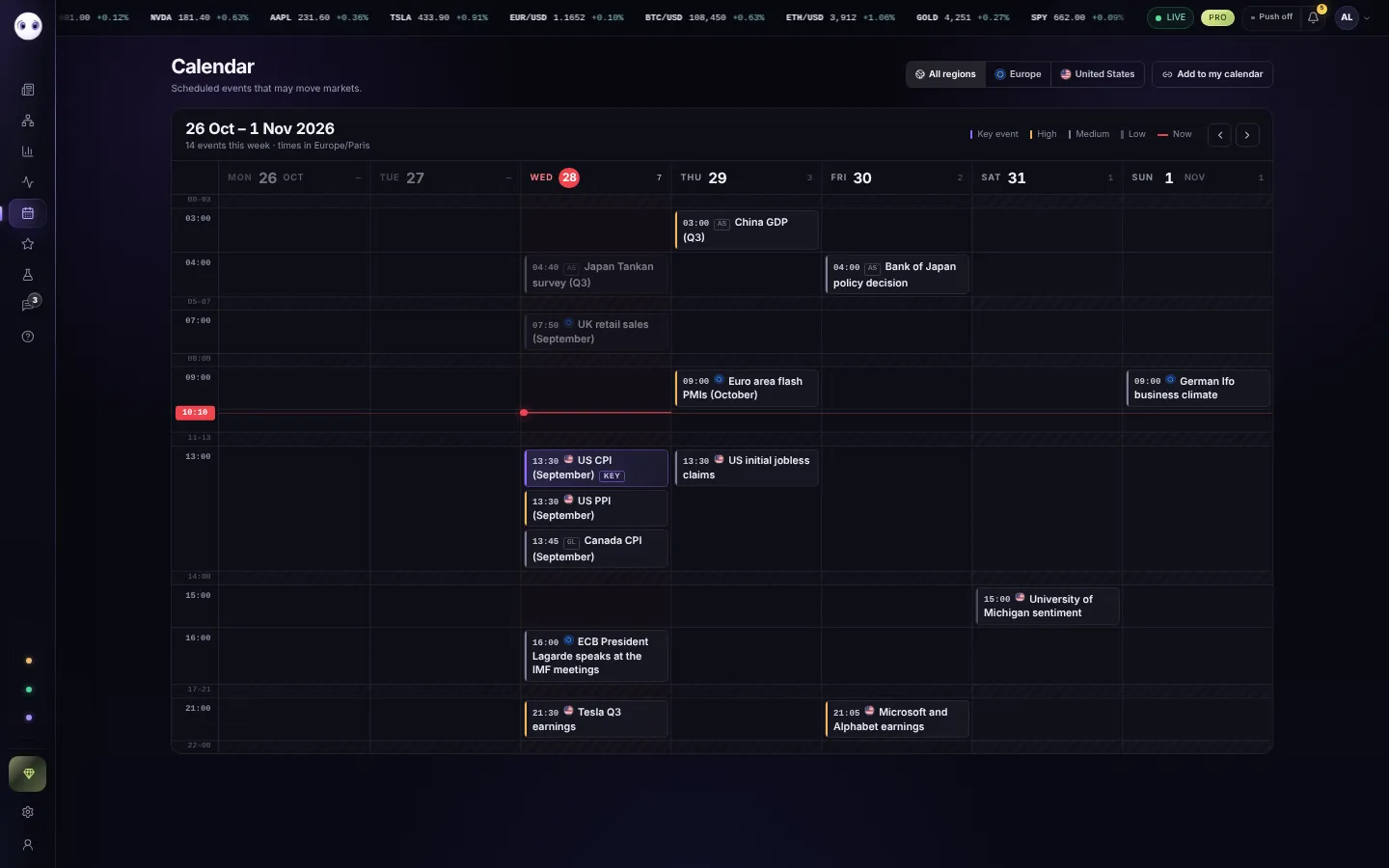
One column per day, one row per hour that holds an event. The empty hours fold into thin hatched rows, so the week fits the screen.
Its dates, then its events, company reports and listings. Every hour is given in your device's time zone, named here.
Today in red. On the right of each day, its number of events.
A red line marks the present moment and moves down today's column. What is already past is dimmed.
One to three bars: low, medium, high. Key marks the few releases and decisions that weigh most.
Its hour, its region, its importance and its title. When they are known, its figures: A for actual, F for forecast, P for previous.
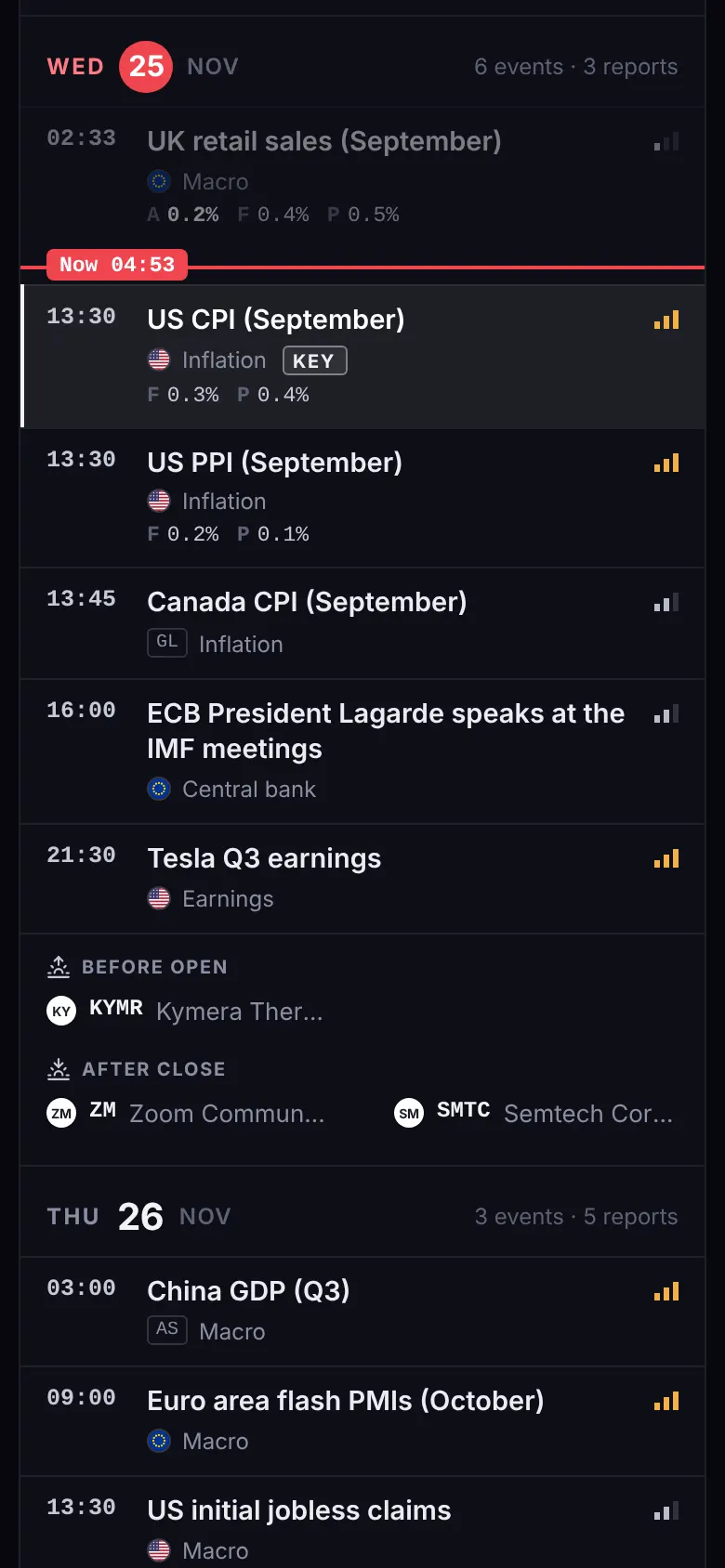
The days become a list: each day's events in order, then its company reports and its listings.
The same red marker, between what is past and what is coming.
Regions and weeks
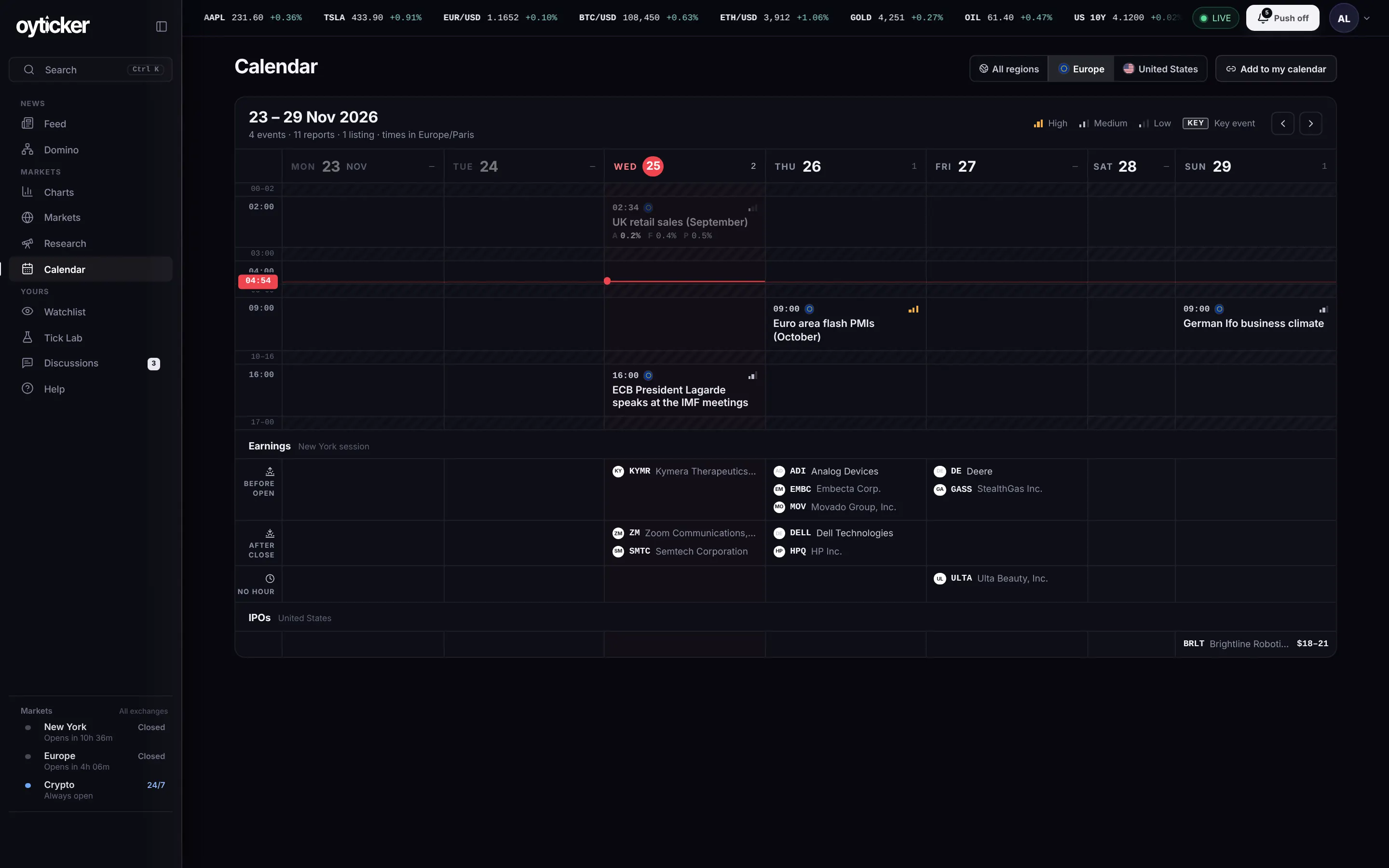
All regions, Europe or the United States.
The events of other regions leave the week and its count. Events of Asia or the whole world show under All regions; company reports and listings stay.
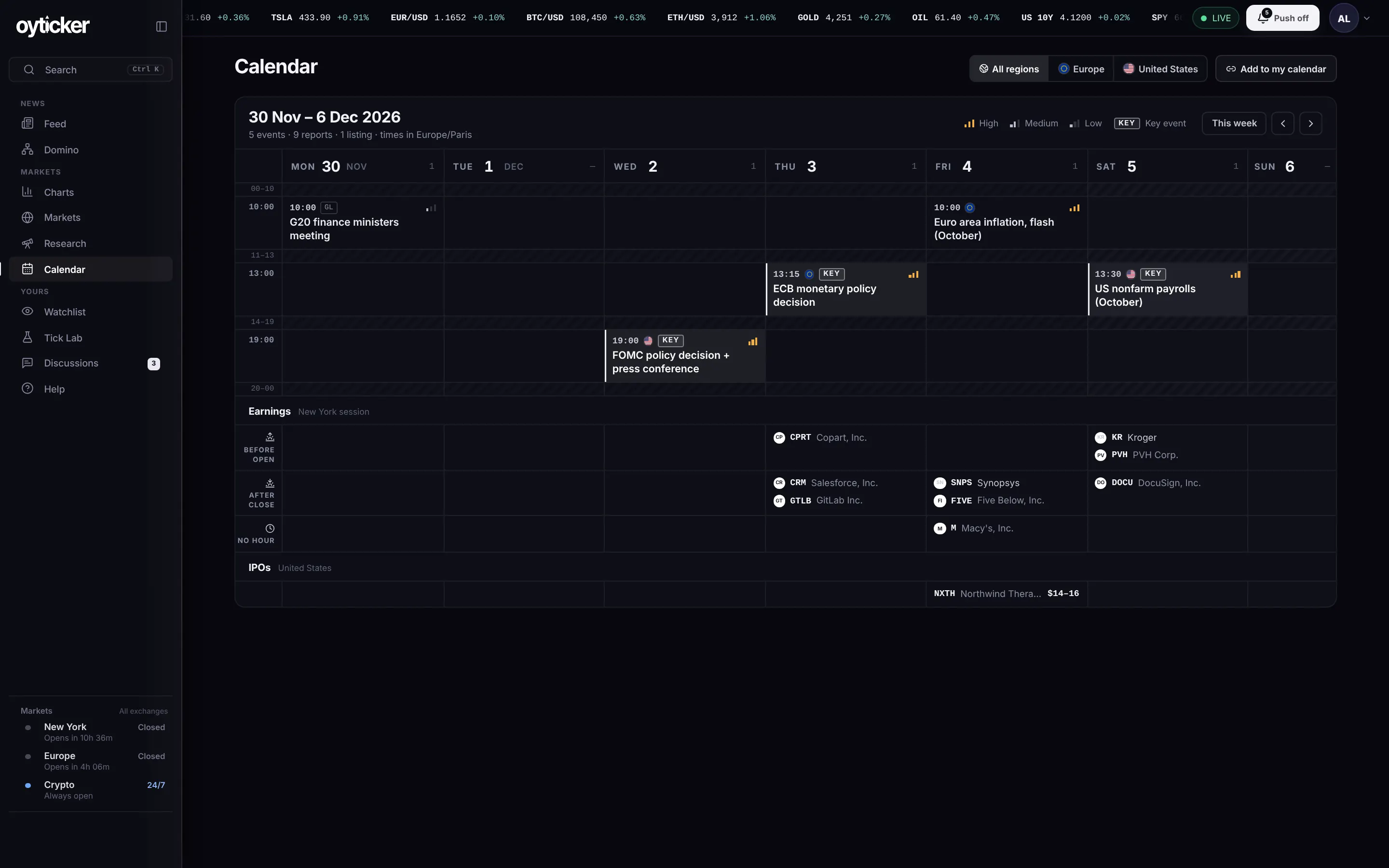
Back as far as the week of thirty days ago; forward to the last event scheduled, four weeks at least.
Its dates and its counts replace the current ones. This week brings you back.
An event

Every event of the week opens its window.
The day, the hour and how far away it is. Then the region, the category and the importance.
Forecast and previous before the release, actual once it is out. Under them, a note on what the release is watched for.
How much the first market listed moved on this release's past days, against an ordinary day: limited, moderate, high or very high. Then the markets it usually concerns.
Each past release with the move of each market, close to close on that day, and a link to the official source. Below: average size, ordinary day, rises and falls.
This event alone: in Google or Outlook, or as an .ics file for Apple and other calendar apps.
The level compares the average size of the release-day move, up or down, with the average move of the other days:
- Very high
- At least 1.8 times an ordinary day.
- High
- At least 1.35 times.
- Moderate
- At least 1.1 times.
- Limited
- Less than that.
A release with fewer than four measured past days, and an event of a kind that is not tracked, is rated from its importance instead: high, moderate or limited.
Past reactions describe past days: a size, never a direction. They say nothing certain about the next release.
Add to my calendar

Above the week, beside the regions.
Every event of the Calendar appears in your own calendar app, and new ones are added as they are scheduled. Copy link takes the address.
Each key opens that app's subscription to the link. In another app, paste the link into “Add calendar from URL”.
Calendar apps refresh a subscription every few hours: a change made here takes that long to reach them.
Earnings and listings
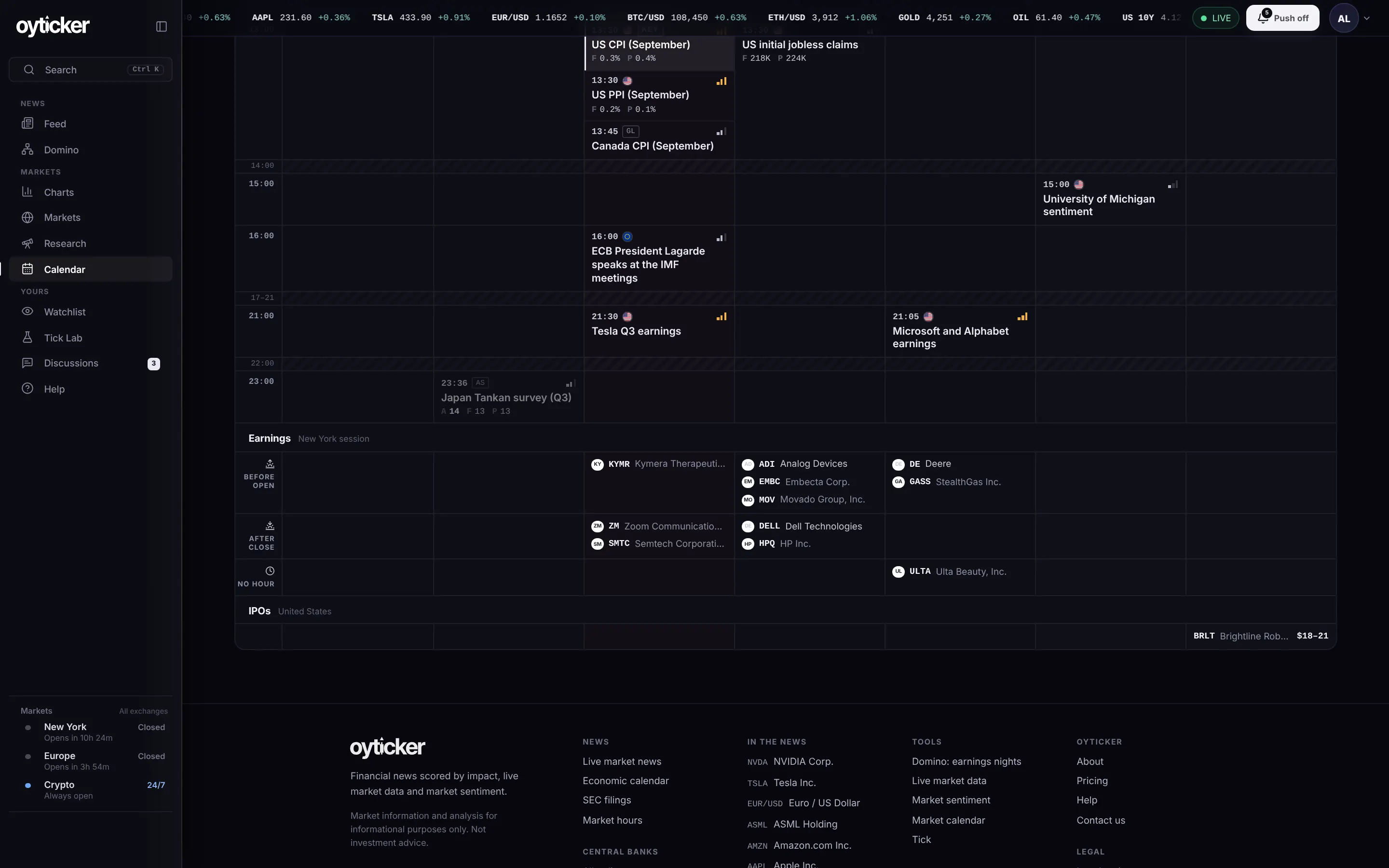
Under the hours, on the same days: the dates companies announced for their results, the largest companies first.
Before the open and after the close of the New York session, and No hour when the company gave none.
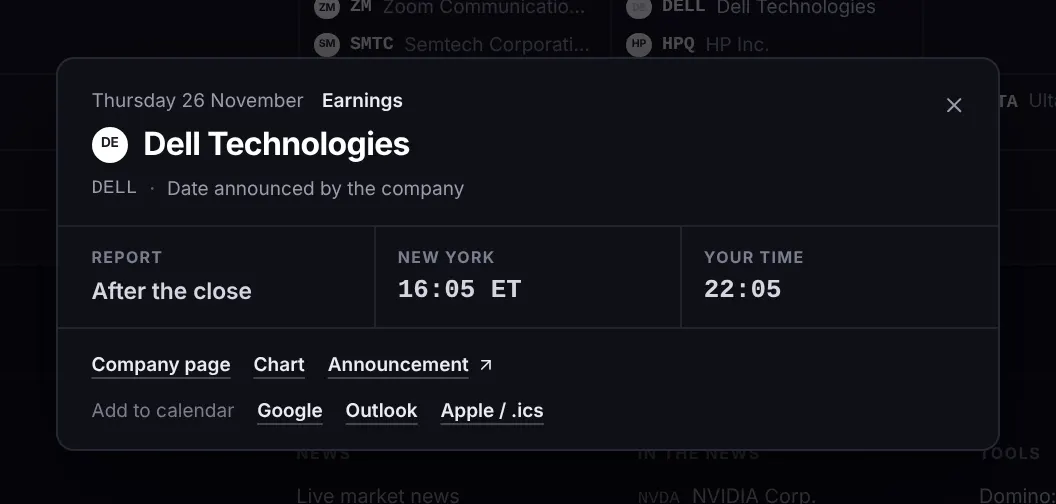
Each company opens its window.
Before the open or after the close, the hour in New York when the company gave one, and the same hour in your time zone.
The company's page, its chart, the announcement of the date, and the report added to your own calendar.
The last row: the listings expected on US exchanges, from a week back to five weeks ahead.
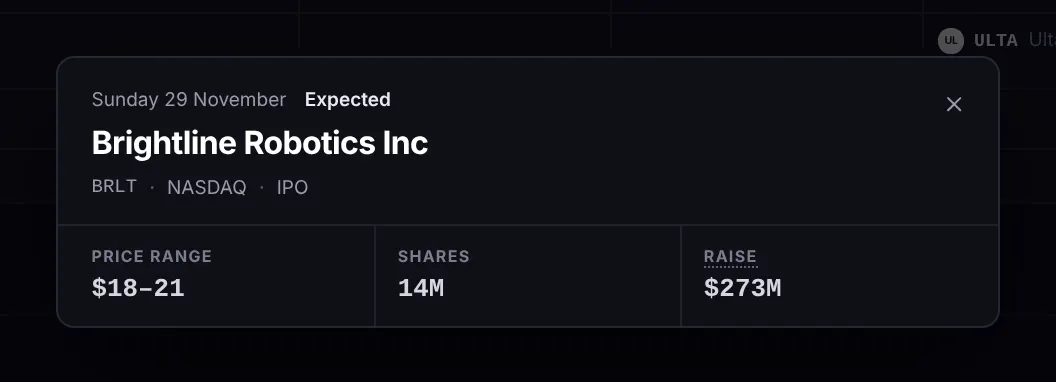
Its ticker, its name and its price range. It opens its window too.
Expected or listed, its exchange, its price range or offer price, the shares offered, and what it raises at that price.
A day with many reports shows its twelve largest companies and counts the others in a row named More.
The screens show simulated prices and stories.